-
Your shopping cart is empty!


Essentials of Database Management System
- ₹595.00
SHARE
- Cover
- Title Page
- Copyright Page
- Dedication
- Preface
- Contents at a Glance
- Contents
- 01. Database Management Systems (DBMS)
- 1.1 Information
- 1.2 Data and Data Management
- 1.3 File-based Data Management
- 1.3.1 Disadvantages of File-based Data Management Systems
- 1.3.1.1 Need for Programming and Skilled Personnel
- 1.3.1.2 Lack of Data Security
- 1.3.1.3 Information Compartmentalization
- 1.3.1.4 Structural Dependency
- 1.3.1.5 Data Dependency
- 1.3.1.6 Data Redundancy
- 1.3.1.7 Data Inconsistency
- 1.3.1 Disadvantages of File-based Data Management Systems
- 1.4 Database Systems
- 1.4.1 Why a Database?
- 1.4.2 Comparison between Database and File-processing Systems
- 1.4.3 Self-describing Nature of a Database System
- 1.4.4 Data Independence and Data Abstraction
- 1.4.5 Support of Multiple Views of the Data
- 1.4.6 Sharing of Data and Multiuser Transaction Processing
- 1.5 Organization of a Database
- 1.6 Characteristics of Data in a Database
- 1.7 Database Management Systems (DBMS)
- 1.7.1 Benefits of using a DBMS
- 1.8 Functions of DBMS
- 1.8.1 Transaction Management
- 1.8.2 Concurrency Control
- 1.8.3 Recovery Management
- 1.8.4 Security Management
- 1.8.5 Language Interface
- 1.8.6 Storage Management
- 1.8.7 Data Catalog Management
- 1.9 Components of a DBMS
- 1.9.1 Query Processor
- 1.9.2 File Manager
- 1.9.3 DML Preprocessor
- 1.9.4 DDL compiler
- 1.9.5 Data Dictionary Manager
- 1.9.6 Database Manager (DM)
- 1.10 Data Dictionary
- 1.10.1 Users of the Data Dictionary
- 1.10.2 Benefits of Data Dictionaries
- 1.10.3 Data Dictionary Types
- 1.11 Database Users
- 1.11.1 Database Administrator (DBA)
- 1.11.1.1 Recoverability
- 1.11.1.2 Integrity
- 1.11.1.3 Security
- 1.11.1.4 Availability
- 1.11.1.5 Performance
- 1.11.1.6 Development/Testing Support
- 1.11.2 Database Designers
- 1.11.3 End Users
- 1.11.4 System Administrator
- 1.11.5 Security Officers
- 1.11.6 Network Administrators
- 1.11.1 Database Administrator (DBA)
- 1.12 Summary
- Review Questions
- Short Answer Questions
- Descriptive Type Questions
- Essay Type Questions
- Fill in the Blanks
- True or False
- Multiple Choice Questions
- 02. Database Architecture and Design
- 2.1 Introduction
- 2.2 Database Architecture
- 2.3 Data Abstraction
- 2.4 ANSI/SPARC Architecture
- 2.4.1 External or Logical Schema
- 2.4.2 Conceptual Schema
- 2.4.3 Internal or Physical Schema
- 2.4.4 Database Users and ANSI/SPARC Architecture
- 2.5 Physical and Logical Data Independence
- 2.6 Database Languages
- 2.7 Database Design
- 2.7.1 Requirements Analysis
- 2.7.2 Information Modeling
- 2.8 Design Constraints
- 2.8.1 Structural Constraints
- 2.8.2 Type Constraints
- 2.8.3 Range Constraints
- 2.8.4 Relationship Constraints
- 2.8.5 Temporal Constraints
- 2.9 Summary
- Review Questions
- Short Answer Questions
- Descriptive Type Questions
- Essay Type Questions
- Fill in the Blanks
- True or False
- Multiple Choice Questions
- 03. Data Models
- 3.1 Introduction
- 3.2 Conceptual, Physical and Logical Database Models
- 3.3 Database Relationships
- 3.4 Hierarchical Model
- 3.4.1 Advantages
- 3.4.2 Disadvantages
- 3.5 Network Model
- 3.5.1 Advantages
- 3.5.2 Disadvantages
- 3.6 Relational Model
- 3.6.1 Advantages
- 3.6.2 Disadvantages
- 3.7 E-R Model
- 3.7.1 Advantages
- 3.7.2 Disadvantages
- 3.8 Object-oriented Model
- 3.8.1 Advantages
- 3.8.2 Disadvantages
- 3.9 Object-relational Model
- 3.10 Deductive/Inference Model
- 3.11 Summary
- Review Questions
- Short Answer Questions
- Descriptive Type Questions
- Essay Type Questions
- Fill in the Blanks
- True or False
- Multiple Choice Questions
- 04. Entity-Relationship (E-R) Modeling
- 4.1 Introduction
- 4.2 E-R MODEL
- 4.3 Components of an E-R Model
- 4.3.1 Entities
- 4.3.2 Attributes
- 4.3.2.1 Simple Attribute
- 4.3.2.2 Composite Attribute
- 4.3.2.3 Single-valued Attribute
- 4.3.2.4 Multi-valued Attribute
- 4.3.2.5 Derived Attribute
- 4.3.2.6 Entities and Attributes
- 4.3.3 Entity Identifiers
- 4.3.4 Instances of Entities
- 4.3.5 Attribute Domains
- 4.4 E-R Diagram Conventions
- 4.5 Relationships
- 4.5.1 Degree
- 4.5.2 Connectivity
- 4.5.3 Cardinality
- 4.5.4 Dependency
- 4.5.5 Participation Constraints
- 4.5.6 Example
- 4.6 Composite Entities
- 4.7 Entity List
- 4.8 E-R Diagrams (ERDS)
- 4.8.1 Types of E-R Diagrams
- 4.9 E-R Modeling Symbols
- 4.10 Summary
- Review Questions
- Short Answer Questions
- Descriptive Type Questions
- Essay Type Questions
- Fill in the Blanks
- True or False
- Multiple Choice Questions
- Exercises
- 05. Enhanced Entity-Relationship (EER) Model
- 5.1 Introduction
- 5.2 Superclass and Subclass Entity Types
- 5.3 Attribute Inheritance
- 5.4 Specialization
- 5.5 Generalization
- 5.5.1 Specialization/Generalization Constraints
- 5.5.1.1 Disjoint Constraint
- 5.5.1.2 Participation Constraint
- 5.5.1 Specialization/Generalization Constraints
- 5.6 Categorization
- 5.7 Summary
- Review Questions
- Short Answer Questions
- Descriptive Type Questions
- Essay Type Questions
- Fill in the Blanks
- True or False
- Multiple Choice Questions
- 06. Relational Database Management Systems (RDBMS)
- 6.1 Introduction
- 6.2 RDBMS Terminology
- 6.3 The Relational Data Structure
- 6.4 Relational Data Manipulation
- 6.5 Codd’s Rules
- 6.5.1 Information Rule
- 6.5.2 Guaranteed Access Rule
- 6.5.3 Systematic Treatment of Nulls Rule
- 6.5.4 Active On-line Catalog based on the Relational Model
- 6.5.5 Comprehensive Data Sub-language Rule
- 6.5.6 View Updating Rule
- 6.5.7 High-level Insert, Update and Delete
- 6.5.8 Physical Data Independence
- 6.5.9 Logical Data Independence
- 6.5.10 Integrity Independence
- 6.5.11 Distribution Independence
- 6.5.12 Non-subversion Rule
- 6.6 Summary
- Review Questions
- Short Answer Questions
- Descriptive Type Questions
- Essay Type Questions
- Fill in the Blanks
- True or False
- Multiple Choice Questions
- 07. Relational Data Integrity and Database Constraints
- 7.1 Introduction
- 7.2 Integrity Constraints
- 7.2.1 Domain Constraints
- 7.2.2 Entity Integrity
- 7.2.3 Referential Integrity
- 7.2.4 Operational Constraints
- 7.3 Summary
- Review Questions
- Short Answer Questions
- Fill in the Blanks
- True or False
- Multiple Choice Questions
- 08. Data Normalization
- 8.1 Introduction
- 8.2 Pitfalls in Relational Database Design
- 8.3 Decomposition
- 8.3.1 Desirable Properties of Decomposition
- 8.3.2 Exercise
- 8.4 Functional Dependencies
- 8.4.1 Inference Rules for Functional Dependencies
- 8.5 Normalization
- 8.6 Keys
- 8.7 Relationships
- 8.8 First Normal Form (1NF)
- 8.9 Second Normal Form (2NF)
- 8.10 Third Normal Form (3NF)
- 8.11 Boyce-Codd Normal Form (BCNF)
- 8.11.1 Comparison of 3NF and BCNF
- 8.12 Fourth Normal Form (4NF)
- 8.12.1 Multi-Valued Dependency (MVD)
- 8.13 Fifth Normal Form (5NF)
- 8.14 Lossless Join Dependency
- 8.15 Domain-Key Normal Form (DKNF)
- 8.16 Denormalization
- 8.17 Summary
- Review Questions
- Short Answer Questions
- Descriptive Type Questions
- Essay Type Questions
- Fill in the Blanks
- True or False
- Multiple Choice Questions
- Exercises
- 09. Relational Algebra
- 9.1 Introduction
- 9.2 Relational Algebraic Operations
- 9.2.1 UNION, INTERSECTION and DIFFERENCE
- 9.2.2 CARTESIAN PRODUCT
- 9.2.3 SELECT
- 9.2.4 PROJECT
- 9.2.5 ASSIGNMENT
- 9.2.6 DIVISION
- 9.2.7 RENAME
- 9.2.8 JOIN
- 9.2.8.1 Theta Join
- 9.2.8.2 Natural Join
- 9.2.8.3 Outer Join
- 9.2.8.4 Semijoin
- 9.3 Aggregate Functions
- 9.4 UPDATE OPERATIONS
- 9.4.1 Deletion
- 9.4.2 Insertion
- 9.4.3 Updating
- 9.5 Exercise
- 9.5.1 Answers
- 9.6 Summary
- Review Questions
- Short Answer Questions
- Descriptive Type Questions
- Essay Type Questions
- Fill in the Blanks
- True or False
- Multiple Choice Questions
- 10. Relational Calculus
- 10.1 Introduction
- 10.2 Tuple Relational Calculus
- 10.2.1 Expressions and Formulas
- 10.2.2 Existential and Universal Quantifiers
- 10.3 Domain Relational Calculus
- 10.4 Exercises
- 10.5 Summary
- Review Questions
- Short Answer Questions
- Descriptive Type Questions
- Fill in the Blanks
- True or False
- Multiple Choice Questions
- 11. Tables Used in this Book
- 11.1 Introduction
- 12. Structured Query Language (SQL)
- 12.1 Introduction
- 12.2 Characteristics of SQL
- 12.3 Advantages of SQL
- 12.4 Types of SQL Commands
- 12.4.1 Data Definition Language (DDL)
- 12.4.2 Data Manipulation Language (DML)
- 12.4.3 Data Query Language (DQL)
- 12.4.4 Data Control Language (DCL)
- 12.4.5 Data Administration Statements (DAS)
- 12.4.6 Transaction Control Statements (TCS)
- 12.5 SQL Operators
- 12.6 Arithmetic Operators
- 12.7 Comparison Operators
- 12.8 Logical Operators
- 12.9 Set Operators
- 12.10 Operator Precedence
- 12.11 Summary
- Review Questions
- Short Answer Questions
- Descriptive Type Questions
- Essay Type Questions
- Fill in the Blanks
- True or False
- Multiple Choice Questions
- 13. Tables, Views and Indexes
- 13.1 Tables
- 13.1.1 Creating a Table
- 13.1.2 Modifying a Table
- 13.1.3 Deleting a Table
- 13.2 Views
- 13.2.1 Creating a View
- 13.2.2 Data Query and Manipulation Operations with Views
- 13.2.3 The CHECK OPTION
- 13.2.4 Views Involving Multiple Tables
- 13.2.5 Updateable and Non-updateable Views
- 13.2.6 Advantages of Views
- 13.2.7 Using Views
- 13.2.8 Dropping a View
- 13.3 Indexes
- 13.3.1 Book Index vs. Table Index
- 13.3.2 Why Use an Index?
- 13.3.3 Creating an Index
- 13.3.4 Types of Indexes
- 13.3.4.1 Composite Indexes
- 13.3.4.2 Unique Indexes
- 13.3.4.3 Clustered Indexes
- 13.3.5 Dropping an Index
- 13.3.6 Using Indexes
- 13.4 Summary
- Review Questions
- Short Answer Questions
- Descriptive Type Questions
- Essay Type Questions
- Fill in the Blanks
- True or False
- Multiple Choice Questions
- 13.1 Tables
- 14. Queries and Subqueries
- 14.1 Queries
- 14.1.1 Selecting All Columns (SELECT *)
- 14.1.2 Qualified Retrieval
- 14.1.2.1 Eliminating Duplicates Using DISTINCT
- 14.1.3 Select Using IN
- 14.1.4 Select Using BETWEEN
- 14.1.5 Select Using LIKE
- 14.1.5.1 ESCAPE Clause
- 14.1.6 Selecting Computed Values
- 14.1.7 Selection Involving NULLs
- 14.1.8 Grouping While Selecting
- 14.1.9 Ordering While Selecting
- 14.1.10 AND, OR and NOT
- 14.2 Subqueries
- 14.2.1 What is a Subquery?
- 14.2.2 Execution of a Subquery
- 14.2.3 Nested Subqueries
- 14.2.4 Parallel Subqueries
- 14.2.5 Correlated Subquery
- 14.3 Summary
- Review Questions
- Short Answer Questions
- Descriptive Type Questions
- Essay Type Questions
- Fill in the Blanks
- True or False
- Multiple Choice Questions
- 14.1 Queries
- 15. Aggregate Functions
- 15.1 Introduction
- 15.2 General Rules
- 15.3 COUNT( ) and COUNT(*)
- 15.4 SUM( )
- 15.5 AVG( )
- 15.6 MAX( ) and MIN( )
- 15.7 Summary
- Review Questions
- Descriptive Type Questions
- Fill in the Blanks
- True or False
- 16. Insert, Update and Delete Operations
- 16.1 Introduction
- 16.2 INSERT Statement
- 16.2.1 Single row INSERT
- 16.3 Bulk Inserts of Data
- 16.4 UPDATE Statement
- 16.5 DELETE Statement
- 16.6 Summary
- Review Questions
- Short Answer Questions
- Descriptive Type Questions
- Fill in the Blanks
- True or False
- 17. Joins and Unions
- 17.1 Joins
- 17.1.1 Why do we need Joins?
- 17.1.2 Use of Aliases
- 17.1.3 Qualities of a Good Join
- 17.1.4 Theta Joins, Equijoins and Nonequijoins
- 17.1.5 WHERE Clause
- 17.1.6 Using SELECT * in Joins
- 17.1.7 Natural Join
- 17.1.8 Self-join—Joining a Table with Itself
- 17.1.9 Joining More than 2 Tables
- 17.1.10 Cartesian Product
- 17.1.11 Joins Vs. Subqueries
- 17.1.12 Outer Joins
- 17.2 Unions
- 17.2.1 Duplicate Elimination
- 17.2.2 Ordering the Results
- 17.2.3 Order of Evaluation
- 17.3 Summary
- Review Questions
- Short Answer Questions
- Descriptive Type Questions
- Fill in the Blanks
- True or False
- 17.1 Joins
- 18. Programming with SQL
- 18.1 Introduction
- 18.1.1 Embedded SQL
- 18.1.2 Application Program Interface
- 18.2 Query Processing
- 18.3 Embedded SQL
- 18.3.1 Embedded SQL Program
- 18.3.2 Precompilation
- 18.3.3 DCLGEN Command
- 18.3.4 Binding
- 18.3.5 Link-editing
- 18.3.6 Running the Program
- 18.3.7 Advantages of Embedded SQL Programs
- 18.3.8 Automatic Rebinding
- 18.3.9 Embedded SQL Features
- 18.3.10 Error Handling
- 18.4 Cursors
- 18.4.1 Cursor Operations
- 18.5 Triggers
- 18.6 Dynamic SQL
- 18.7 Summary
- Review Questions
- Short Answer Questions
- Descriptive Type Questions
- Essay Type Questions
- Fill in the Blanks
- True or False
- Multiple Choice Questions
- 18.1 Introduction
- 19. Secondary (Auxiliary) Storage Devices
- 19.1 Introduction
- 19.1.1 Advantages of Secondary Storage
- 19.1.1.1 Direct Access Storage
- 19.1.1.2 Sequential Access Storage
- 19.1.1 Advantages of Secondary Storage
- 19.2 Magnetic Tape
- 19.3 Magnetic Disk
- 19.3.1 Hard Disks
- 19.3.2 Flexible Disks
- 19.4 Optical Disk
- 19.5 Magneto-optical (MO) Drives
- 19.6 Summary
- Review Questions
- Short Answer Questions
- Descriptive Type Questions
- Fill in the Blanks
- True or False
- 19.1 Introduction
- 20. Files, File Organization and File Structures
- 20.1 Introduction
- 20.2 Operations on Files
- 20.3 File Storage Organization
- 20.3.1 Sequential File Organization
- 20.3.1.1 Sequential File Processing
- 20.3.1.2 Efficiency of Sequential File Organization
- 20.3.1.3 Advantages and Disadvantages
- 20.3.2 Direct File Organization
- 20.3.2.1 Direct File Processing
- 20.3.2.2 Relative Addressing
- 20.3.2.3 Hashing
- 20.3.2.4 Indexing
- 20.3.2.5 Advantages and Disadvantages
- 20.3.1 Sequential File Organization
- 20.4 Physical Storage Media
- 20.4.1 Cache
- 20.4.2 Main Memory
- 20.4.3 Flash Memory
- 20.4.4 Magnetic Disk, Optical Disk and Magnetic Tape Storage
- 20.5 Storage Device Hierarchy
- 20.6 Storage Access
- 20.7 Buffer Manager
- 20.7.1 Buffer Replacement Strategy
- 20.7.2 Pinned Blocks
- 20.7.3 Forced Output Blocks
- 20.8 File Organization
- 20.8.1 File Volatility
- 20.8.2 File Activity
- 20.8.3 File Query
- 20.8.4 File Size
- 20.8.5 Data Currency
- 20.9 File Structure
- 20.10 Record Types
- 20.10.1 Fixed Length Records
- 20.10.2 Variable Length Records
- 20.10.2.1 Records Having Variable Length Fields
- 20.10.2.2 Records Having Repeating Fields
- 20.10.2.3 Records Having Optional Fields
- 20.10.2.4 File Containing Records of Different Record Types
- 20.10.2.5 Implementation of Variable Length Records
- 20.11 Summary
- Review Questions
- Short Answer Questions
- Descriptive Type Questions
- Essay Type Questions
- Fill in the Blanks
- True or False
- Multiple Choice Questions
- 21. Indexing and Hashing
- 21.1 Introduction
- 21.2 Indexing
- 21.2.1 Ordered Indexes
- 21.2.1.1 Primary Index
- 21.2.1.2 Secondary Indexes
- 21.2.1.3 B+-Tree Indexes
- 21.2.1.4 B-Tree Indexes
- 21.2.1 Ordered Indexes
- 21.3 Hashing
- 21.3.1 Internal Hashing
- 21.3.1.1 Open Addressing
- 21.3.1.2 Chaining
- 21.3.1.3 Multiple Hashing
- 21.3.2 External Hashing
- 21.3.3 Dynamic Hashing
- 21.3.3.1 Extensible Hashing
- 21.3.3.2 Linear Hashing
- 21.3.1 Internal Hashing
- 21.4 Summary
- Review Questions
- Short Answer Questions
- Descriptive Type Questions
- Essay Type Questions
- Fill in the Blanks
- True or False
- Multiple Choice Questions
- 22. Database Security
- 22.1 Introduction
- 22.2 Database Environment
- 22.3 Data Security Risks
- 22.3.1 Data Tampering
- 22.3.2 Eavesdropping and Data Theft
- 22.3.3 Falsifying User Identities
- 22.3.4 Password-related Threats
- 22.3.5 Unauthorized Access to Tables and Columns
- 22.3.6 Unauthorized Access to Data Rows
- 22.3.7 Lack of Accountability
- 22.3.8 Complex User Management Requirements
- 22.4 Dimensions of Database Security
- 22.5 Data Security Requirements
- 22.5.1 Confidentiality
- 22.5.2 Integrity
- 22.5.3 Availability
- 22.6 Database Users
- 22.7 Protecting the Data within the Database
- 22.7.1 Database Privileges
- 22.7.1.1 System Privileges
- 22.7.1.2 Object Privileges
- 22.7.2 Roles
- 22.7.2.1 Uses for Roles
- 22.7.1 Database Privileges
- 22.8 Granting and Revoking Privileges and Roles
- 22.8.1 The GRANT Command
- 22.8.2 The REVOKE Command
- 22.9 Data Encryption
- 22.10 Database Integrity
- 22.11 System Availability
- 22.12 Best Security Practices
- 22.13 Network Security
- 22.13.1 Protecting Data during Transmission
- 22.13.1.1 Controlling Access within the Network
- 22.13.1.2 Encrypting Data for Network Transmission
- 22.13.1.3 Secure Sockets Layer (SSL) Protocol
- 22.13.1.4 Firewalls
- 22.13.1 Protecting Data during Transmission
- 22.14 Authenticating Users to the Database
- 22.15 Security Auditing
- 22.16 Summary
- Review Questions
- Short Answer Questions
- Descriptive Type Questions
- Essay Type Questions
- Fill in the Blanks
- True or False
- Multiple Choice Questions
- 23. Transaction Management and Concurrency Control
- 23.1 Introduction
- 23.2 Transactions
- 23.3 Transaction Properties (ACID Properties)
- 23.3.1 Atomicity
- 23.3.2 Consistency
- 23.3.3 Isolation
- 23.3.4 Durability
- 23.4 Database Structure
- 23.5 Transaction States
- 23.6 Concurrency Control
- 23.6.1 Multiple Update Problem
- 23.6.2 Uncommitted Dependency Problem
- 23.6.3 Incorrect Analysis Problem
- 23.7 Serializability
- 23.7.1 View Serializability
- 23.8 Recoverability
- 23.8.1 Recoverable Schedules
- 23.8.2 Noncascading Schedules
- 23.8.3 Strict Schedules
- 23.9 Concurrency Control Schemes
- 23.9.1 Locking
- 23.9.2 Two-phase Locking
- 23.9.3 Deadlock
- 23.9.4 Granularity
- 23.9.5 Timestamps and Timestamp-based protocols
- 23.9.6 Optimistic Techniques
- 23.10 Transaction Management in SQL
- 23.11 Transactions and Recovery
- 23.12 User-defined Transactions
- 23.13 The COMMIT Command
- 23.14 The ROLLBACK Command
- 23.15 The SAVEPOINT Command
- 23.16 Summary
- Review Questions
- Short Answer Questions
- Descriptive Type Questions
- Essay Type Questions
- Fill in the Blanks
- True or False
- Multiple Choice Questions
- 24. Backup and Recovery
- 24.1 Introduction
- 24.2 Database Backups
- 24.3 Causes of Failures
- 24.4 Why Plan Backups?
- 24.5 Hardware Protection and Redundancy
- 24.6 Transaction Logs
- 24.7 Importance of Backups
- 24.8 Database Recovery
- 24.9 Data Storage
- 24.10 Data Access
- 24.11 Recovery and Atomicity
- 24.12 Recovery Concepts and Terminology
- 24.13 Recovery Facilities
- 24.13.1 Backup mechanism
- 24.14 Logging
- 24.14.1 Checkpointing
- 24.15 Recovery Techniques
- 24.15.1 Deferred Update
- 24.15.2 Immediate Update
- 24.15.3 Shadow Paging
- 24.16 Detached Transaction Actions
- 24.17 Recovery in Multi-database Systems
- 24.17.1 Two-phase Commit Protocol
- 24.18 Database Recovery from Catastrophic Failures
- 24.19 Summary
- Review Questions
- Short Answer Questions
- Descriptive Type Questions
- Essay Type Questions
- Fill in the Blanks
- True or False
- Multiple Choice Questions
- 25. Client/Server Databases
- 25.1 Introduction
- 25.2 Benefits of Client/Server Computing
- 25.2.1 Adaptability
- 25.2.2 Reduced Operating Costs
- 25.2.3 Platform Independence
- 25.2.4 Better Return on Computing Investment
- 25.2.5 Improved Performance
- 25.2.6 Easier Data Access and Processing
- 25.2.7 Decentralized Operations
- 25.3 Costs of Client/Server Computing
- 25.3.1 New Hardware
- 25.3.2 New Software
- 25.3.3 New Networking
- 25.3.4 New Training
- 25.4 Application Architectures
- 25.4.1 Two-tiered Architecture
- 25.4.2 Three-tiered Architecture
- 25.4.2.1 Presentation (GUI) or User services
- 25.4.2.2 Business Services Tier or Business Rules
- 25.4.2.3 Data Services Tier or Business Data
- 25.5 Summary
- Review QUestions
- Short Answer Questions
- Descriptive Type Questions
- Essay Type Questions
- Fill in the Blanks
- True or False
- Multiple Choice Questions
- 26. Distributed Databases
- 26.1 Introduction
- 26.2 Homogeneous and Heterogeneous Distributed Databases
- 26.3 Distributed Data Storage
- 26.4 Advantages of Distributed Databases
- 26.4.1 Local Control of Local Data
- 26.4.2 Transparency
- 26.4.3 Improved Reliability and Availability
- 26.4.4 Performance Improvement
- 26.4.5 Better Response Times
- 26.4.6 Modularity
- 26.4.7 Improved Scalability
- 26.4.8 Site Autonomy
- 26.4.9 Ability to Share Data
- 26.4.10 Direct User Interaction
- 26.5 Disadvantages of Distributed Databases
- 26.5.1 Complexity
- 26.5.2 Cost
- 26.5.3 Technical Problems of Connecting Dissimilar Machines
- 26.5.4 Need for Sophisticated Communication Systems
- 26.5.5 Data Integrity and Security Problems
- 26.5.6 Lack of Professional Support
- 26.6 Client/Server Database Architecture
- 26.7 Two-phase Commit Mechanism
- 26.7.1 Prepare Phase
- 26.7.2 Execute Phase
- 26.8 Functions of Distributed Database Management Systems
- 26.9 Distributed Systems—An Example
- 26.10 Summary
- Review Questions
- Short Answer Questions
- Descriptive Type Questions
- Essay Type Questions
- Fill in the Blanks
- True or False
- Multiple Choice Questions
- 27. Hierarchical and Network Databases
- 27.1 Introduction
- 27.2 Hierarchical Databases
- 27.3 Network Model
- 27.4 Summary
- Review Questions
- Short Answer Questions
- Descriptive Type Questions
- Essay Type Questions
- 28. Object-Oriented and Object-Relational Databases
- 28.1 Object-Oriented Databases
- 28.1.1 The Need for Object-oriented Databases
- 28.1.2 Characteristics of Object-oriented Databases
- 28.1.3 When Should You Use an ODBMS?
- 28.1.4 Comparisons of ODBMS to RDBMS
- 28.1.4.1 Advantages
- 28.1.4.2 Disadvantages
- 28.2 Object-relational Databases
- 28.2.1 Object-relational Database Management Systems (ORDBMS)
- 28.2.2 ORDBMS Data Model
- 28.2.3 ORDBMS Query Language
- 28.2.4 Object-relational Features
- 28.3 Comparison between OODBMS and ORDBMS
- 28.4 Summary
- Review Questions
- Short Answer Questions
- Descriptive Type Questions
- Essay Type Questions
Alexis Leon is a Software Consultant, researcher and writer. He has more than 30 years of consulting experiencein the areas of software development, IT, software engineering, internet and WWW, workflow automation, groupware, product design, process improvement, project management, configuration management, quality assurance, productivity improvement, etc. He has written more than 45 books on computing, IT and management. He has worked with companies like Ponds India Ltd and Tata Consultancy Services. He holds a masters degree (M.Tech) in Industrial Engineering. He can be reached through his website at www.alexisleon.com.Mathews Leon is the Executive Director of L & L Consultancy Services Pvt Ltd, company specialising in web design and development, internet/intranet development, software development, multimedia and CBT development, etc. He has written more than 25 books on computing and IT. He hold a bachelor's degree (B.Tech) in Mechanical Engineering. He can be reached through his web site at http://mathews.lnl.net/.Reviews
There are no reviews for this product.
- 28.1 Object-Oriented Databases

Fundamentals of Computer Architecture
₹495.00
Fundamentals of Computer Architecture retains all the winning Features of the Advanced Computer Arch..

Machine Learning Using Python
₹350.00
Machine Learning Using Python has been designed to meet the needs of students undergoing a one-semes..

Visual Basic.Net
₹650.00
Visual Basic.Net, an object-oriented programming language implemented on .Net framework is the easie..
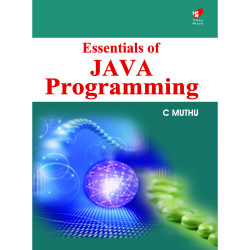
Essentials of Java Programming
₹450.00
Java the general purpose programming language is the choice programming language of professional pro..

Introduction to Information Technology
₹325.00
The book is written in an easy-to-read and jargon-free style. We have used a lot of images, tables, ..
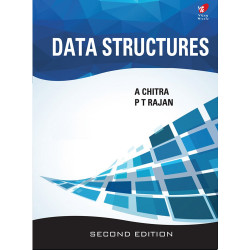
Data Structures 2e
₹550.00
The study of Data Structures provides the base for many fields and areas in computer science and inf..
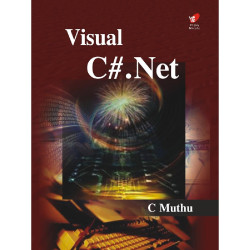
Visual C#.Net
₹650.00
The .Net framework has a lot of advantage over the conventional programming architectures in terms o..

Information Coding Techniques 2e
₹595.00
Information Coding deals with transmitting information efficiently and accurately. This book informa..
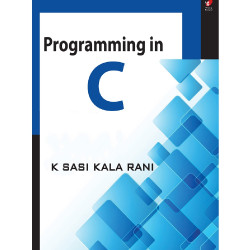
Programming in C
₹425.00
This book, Programming in C, with its emphasis on programming basics and reader-friendly text, has b..

Digital Principles and System Design (AU R - 2017)
₹695.00
This book Digital Principles and System Design provides the basic understanding of design and analys..

Python Programming
₹195.00
This book Python Programming Theory and Practical is designed to address the requirements of undergr..

Operating Systems
₹395.00
This book Operating Systems by V. Sridhar is designed as per the Anna University syllabus for studen..
Deep Learning Using Python
₹395.00
This book Deep Learning Using Python has been designed for undergraduate and postgraduate students o..
Fundamentals of Database Management System, 2e
₹450.00
This book is designed to provide a thorough grounding into the fundamentals of the subject while off..


