-
Your shopping cart is empty!

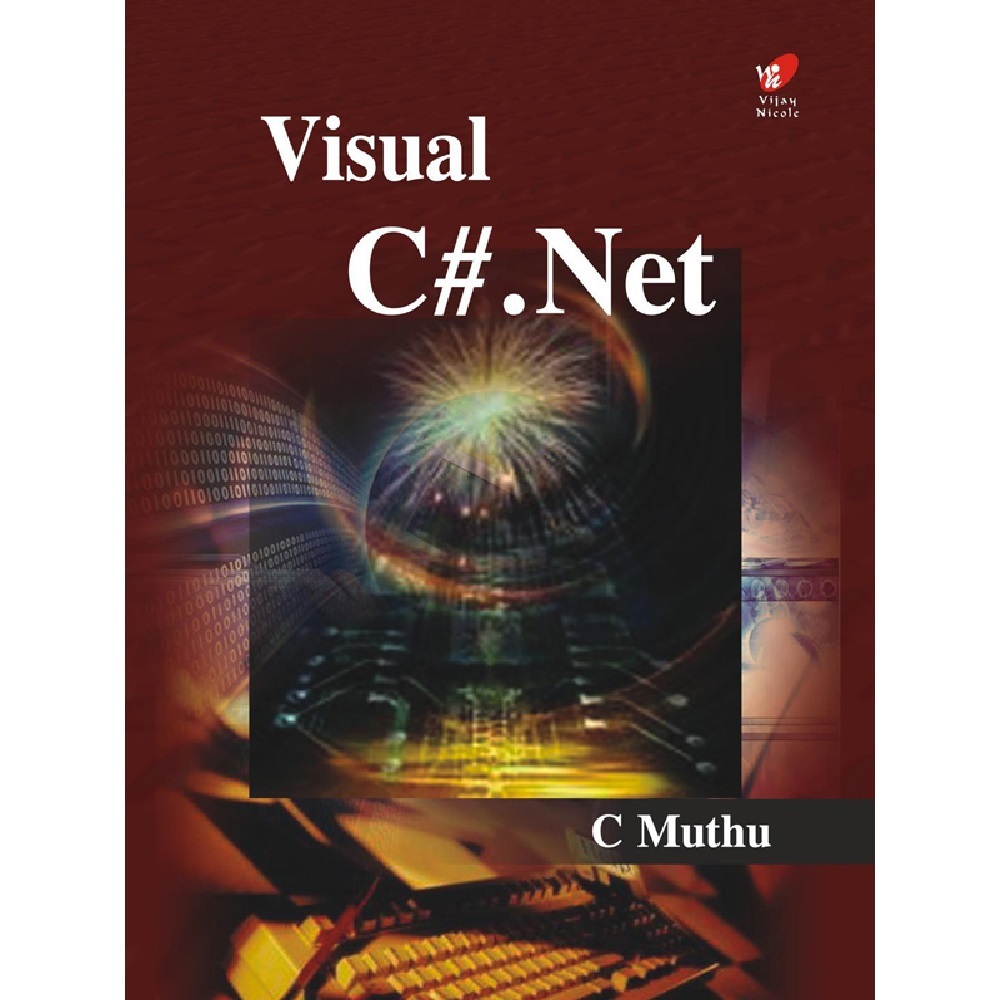
Visual C#.Net
- ₹650.00
SHARE
The .Net framework has a lot of advantage over the conventional programming architectures in terms of security, development, platform independence, and maintenance. This book focuses on Visual C#.Net programming. Designed for students and professionals, the book provides complete coverage of fundamental concepts and gradually introduces topics like attributes, database connectivity, and web applications.
- Cover
- Title Page
- Copyright Page
- Contents
- Preface
- Introduction to Visual C#.Net
- 1.1 Introduction
- 1.2 .Net Framework
- 1.3 .Net Base Classes
- 1.4 DLL, COM, COM+, DCOM and Assemblies
- 1.5 VC#.Net Language
- 1.6 Development and Execution of a Simple VC#.Net Program in the Command Prompt Window
- Summary
- Try Yourself
- Features in Visual Studio.Net
- 2.1 Introduction
- 2.2 Start Page
- 2.3 Solution Explorer Window
- 2.4 Class View Window
- 2.5 Object Browser
- 2.6 Code Window
- 2.7 Intellisense
- 2.8 Help Facility
- 2.9 Compiling the Code
- 2.10 Code Debugging
- Summary
- Try Yourself
- Data Types and Console I/O
- 3.1 Introduction
- 3.2 Value Types and Reference Types
- 3.3 Boxing and Unboxing
- 3.4 Variable Declaration and Initialization
- 3.5 Data Type Conversion
- 3.6 Operators and Expressions
- 3.7 Console I/O Functions
- Summary
- Try Yourself
- Control Statements
- 4.1 Introduction
- 4.2 ‘if’ Statement
- 4.3 ‘switch’ Statement
- 4.4 ‘while’ Statement
- 4.5 ‘do… while’ Statement
- 4.6 ‘for’ Statement
- 4.7 ‘foreach’ Statement
- 4.8 ‘goto’ Statement
- Summary
- Try Yourself
- Arrays and Methods
- 5.1 Introduction
- 5.2 One-dimensional Arrays
- 5.3 Two-dimensionalArrays
- 5.4 Jagged Array
- 5.5 Array and Arraylist Classes
- 5.6 Methods
- 5.7 ‘value’Type Parameters
- 5.8 ‘ref’Type Parameter
- 5.9 ‘out’Type Parameters
- 5.10 ‘params’Type Parameters
- 5.11 Method Overloading
- Summary
- Try Yourself
- Classes and Objects
- 6.1 Introduction
- 6.2 Definition and Usage of a Class
- 6.3 Instance and Static Class Members
- 6.4 Constant Data Members
- 6.5 Readonly Data Members
- 6.6 Constructor Overloading
- 6.7 Copy Constructor
- 6.8 Static Constructor
- 6.9 Destructors
- Summary
- Try Yourself
- Properties, Indexers, and Operator Overloading
- 7.1 Introduction
- 7.2 Properties
- 7.3 Indexers
- 7.4 Operator Overloading
- 7.5 Conversion Operators
- Summary
- Try Yourself
- Inheritance and Polymorphism
- 8.1 Introduction
- 8.2 A Simple Example of Inheritance
- 8.3 Method Overriding
- 8.4 Accessing Base Class Members
- 8.5 Accessing Base Class Constructors
- 8.6 Virtual Methods
- 8.7 Abstract Classes and Abstract Methods
- 8.8 Sealed Classes
- Summary
- Try Yourself
- Interfaces, Namespaces, and Components
- 9.1 Introduction
- 9.2 Definition and Usage of Interfaces
- 9.3 Multiple Implementation of an Interface
- 9.4 Interface Inheritance
- 9.5 Namespaces
- 9.6 Components
- 9.7 Components and Namespaces
- 9.8 Access Modifiers
- Summary
- Try Yourself
- Delegates, Events, and Attributes
- 10.1 Introduction
- 10.2 Delegates
- 10.3 Events
- 10.4 Attributes
- Summary
- Try Yourself
- Exception-handling
- 11.1 Introduction
- 11.2 Default Exception-handling Mechanism
- 11.3 User-defined Exception-handling Mechanism
- 11.4 Backtracking
- 11.5 “throw” Statement
- 11.6 Custom Exception
- Summary
- Try Yourself
- Multithreading
- 12.1 Introduction
- 12.2 Usage of Threads
- 12.3 “Thread” Class
- 12.4 Thread Priority
- 12.5 Synchronization
- Summary
- Try Yourself
- I/O Streams
- 13.1 Introduction
- 13.2 Streams
- 13.3 Binary Data Files
- 13.4 Text Files
- 13.5 Data Files
- 13.6 File and Directory Operations
- Summary
- Try Yourself
- Networking
- 14.1 Introduction
- 14.2 Networks, Domain Names, and Protocols
- 14.3 Layers in Network Communication
- 14.4 Ports
- 14.5 TcpClient, TcpListener, NetworkStream, and Socket Classes
- Summary
- Try Yourself
- Windows Applications-I
- 15.1 Introduction
- 15.2 Event-driven Programming Model
- 15.3 Important Classes Used in Windows Applications
- 15.4 Textbox and Label Controls
- 15.5 Button Control
- 15.6 Checkbox Control
- 15.7 Radiobutton Control
- 15.8 Groupbox Control
- 15.9 Listbox Control
- 15.10 Checkedlistbox Control
- 15.11 Combobox Control
- 15.12 The Monthcalendar Control
- Summary
- Try Yourself
- Windows Applications-II
- 16.1 Introduction
- 16.2 Docking Controls
- 16.3 Progressbar Control
- 16.4 Trackbar Control
- 16.5 Panel Control
- 16.6 TreeViewControl
- 16.7 Splitter Window
- 16.8 The Menu Class
- 16.9 The Menuitem Class
- 16.10 Dialog Boxes
- 16.11 The Toolbar Class
- 16.12 The Statusbar Class
- Summary
- Try Yourself
- Database Connectivity
- 17.1 Introduction
- 17.2 Advantages of ADO.Net
- 17.3 Managed Providers
- 17.4 Developing a Simple ADO.Net Based Application
- 17.5 Creation of a Data Table
- 17.6 Retrieving Data from Tables
- 17.7 Table Updating
- 17.8 Disconnected Data Access through Dataset Object
- Summary
- Try Yourself
- Basic Web Controls
- 18.1 Introduction
- 18.2 Advantages of ASP. Net
- 18.3 ASP.Net Object Model
- 18.4 Server-side Controls
- 18.5 Server-side Processing of Client-side events
- 18.6 Creating the FirstASP.Net Page
- 18.7 Calender Controls
- 18.8 Adrotater Control
- Summary
- Try Yourself
- Validation and List Web Controls
- 19.1 Introduction
- 19.2 Validation Controls
- 19.3 List Controls
- Summary
- Try Yourself
- User and Custom Web Controls
- 20.1 Introduction
- 20.2 User Controls
- 20.3 User Controls and Custom Properties
- 20.4 Custom Controls
- Summary
- Try Yourself
- Web Services
- 21.1 Introduction
- 21.2 Concepts Behind Web Services
- 21.3 Creating a Simple Web Service
- 21.4 Creating a Web Service that Makes Use of a Data Source
- Summary
- Try Yourself
- Index
Dr C Muthu is currently Reader, Department of Information and Statistics, St. Josephs College, Trichy, Tamil Nadu. An experienced computing professional of over 23 years, Dr C Muthu has been teaching Java for 9 years. He is a visiting associate at Bharathidasan University and a Senior Faculty at Visual Soft, a popular IT training organization in Trichy. He is also honorary technical advisor to Shalom InfoTech (P) Ltd, a fledgling software development company in Trichy. A prolific writer, his books include VB.Net, Visual C#.Net and Programming with JAVA.
Reviews
There are no reviews for this product.

Introduction to Data Science
₹350.00
This book, Introduction to Data Science, is a comprehensive textbook designed for undergraduatestude..

Machine Learning Using Python
₹350.00
Machine Learning Using Python has been designed to meet the needs of students undergoing a one-semes..

Python for Data Science
₹250.00
Python for Data Science is an indispensable textbook, spanning essential concepts and advanced techn..

Fundamentals of Computer Architecture
₹495.00
Fundamentals of Computer Architecture retains all the winning Features of the Advanced Computer Arch..

Python Programming
₹195.00
This book Python Programming Theory and Practical is designed to address the requirements of undergr..
Essentials of Java Programming
₹450.00
Java the general purpose programming language is the choice programming language of professional pro..
Data Structures 2e
₹550.00
The study of Data Structures provides the base for many fields and areas in computer science and inf..

Management Information System
₹550.00
Modern approach to MIS treats it as an integrated management function reckons for the digital world...

Information Coding Techniques 2e
₹595.00
Information Coding deals with transmitting information efficiently and accurately. This book informa..
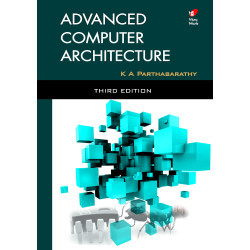
Advanced Computer Architecture 3e
₹495.00
This book Advanced Computer Architecture is designed for a one-semester advanced course targeted at ..

Introduction to Information Technology
₹325.00
The book is written in an easy-to-read and jargon-free style. We have used a lot of images, tables, ..
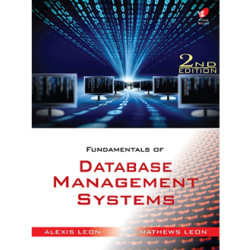
Fundamentals of Database Management System, 2e
₹450.00
This book is designed to provide a thorough grounding into the fundamentals of the subject while off..

Operating System
₹250.00
This book, Operating System, is crafted for students pursuing Computer Science, Computer Application..


