-
Your shopping cart is empty!

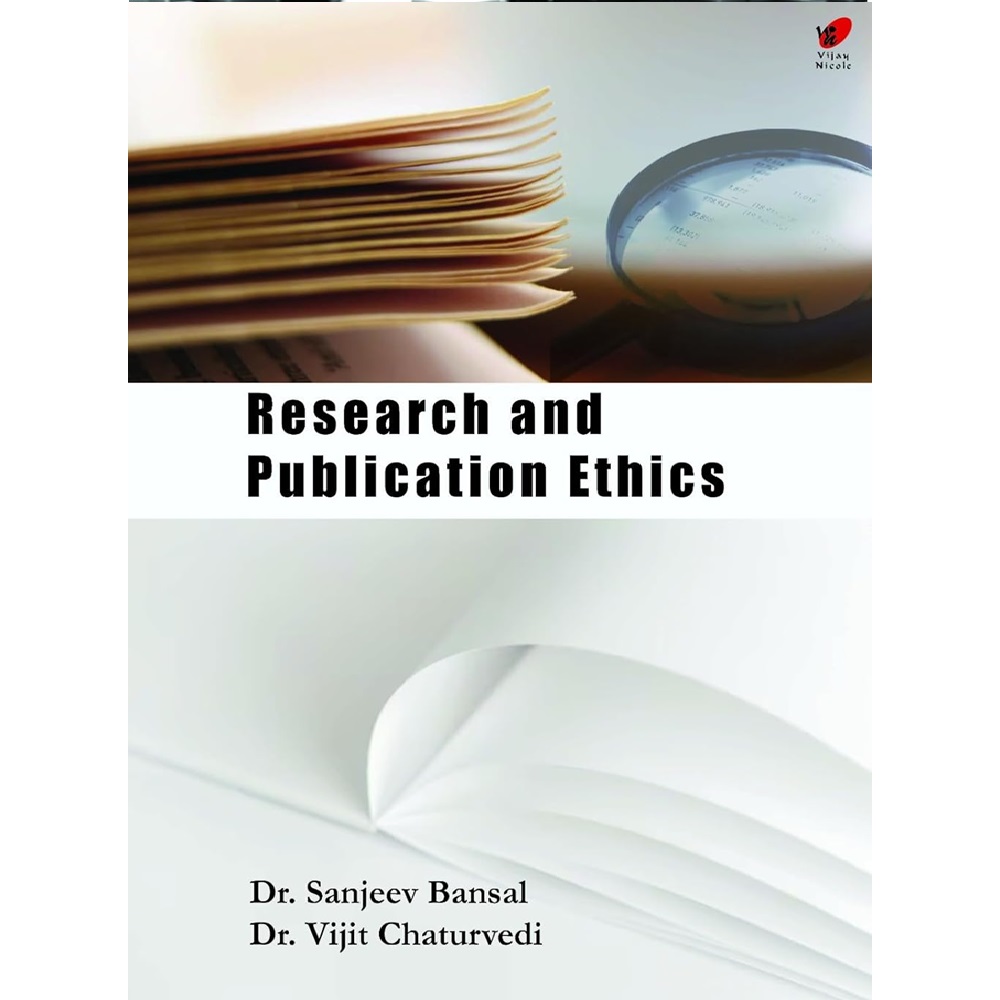
Research and Publication Ethics
- ₹300.00
SHARE
Research and Publication Ethics offers comprehensive insights into the multifaceted aspects of ethics in research, emphasizing its critical role in achieving personal and professional success. It serves as an essential guide for students, researchers, and academics, fostering a deep understanding of ethical practices and promoting integrity in research and publication.
Preface
Chapter 1 – Philosophy and Ethics
1.1 Understanding Philosophy and Research
1.2 An Introduction of Indian Philosophy
1.3 Evolution of Philosophy
1.4 Need of Philosophy in Research
1.5 Branches of Philosophy
1.6 Metaphysics
1.7 Philosophy of Metaphysics
1.8 Philosophy of Axiology
1.9 Epistemology
1.10 Types of Epistemologies
1.11 Ethics
1.12 Moral Judgement
1.13 Nature of Moral Judgements and Reactions
1.14 Need to Moral Consciousness
1.15 Types of Moral Consciousness
1.16 Learning of Moral Judgement and Ethics from Indian Scriptures
1.17 From Scripture
1.18 Learnings from Ramayana
1.19 Learning from Guru Granth Sahib
1.20 Learning from Quran Sharif
Questions to Ponder
Chapter 2 – Scientific Conduct
2.1 Ethics with Respect to Science, Social Science and Research
2.2 Researchers Responsibilities
2.3 Intellectual Research Honesty and Research Integrity
2.4 Scientific Misconducts
2.5 Plagiarism and Types
2.6 Falsification
2.7 Fabrication
2.8 Redundant Publications Duplicate and Overlapping Publications and Issues of Salami Slicing
2.9 Selective Reporting and Misrepresentation of Data
2.10 Supporting the Integrity in Research
Questions to Ponder
Chapter 3 – Publications Ethics
3.1 Understanding Publication Ethics
3.2 Importance of Publication Ethics
3.3 Responsibility of Authors
3.4 Responsibilities of Publishers
3.5 Roles and Responsibility of Editors
3.6 Best Practices in Research
3.7 COPE
3.8 WAME [World Association of Medical Editors]
3.9 Conflicts of Interest
3.10 Research and Publication Misconduct
3.11 Regulating Misconduct in Research
3.12 Types of Misconduct
3.13 Predatory Publishers and Journals
3.14 What are Predatory Journals
3.15 Conclusion
Questions to Ponder
Chapter 4 – Open Access Publishing
4.1 Introduction to Open Access Publications
4.2 Need of Open Access Publication
4.3 Process to Use Open Access Research
4.4 SHERPA/ RoMEO Online Resource to Check Publisher Copyright & Self-archiving Policies
4.5 What is SHERPA and How does it Works
4.6 RoMEO Online Resource (Rights Metadata for Open Archiving)
4.7 Self-archiving Policies
4.8 Examples of Self Archiving Policies (Adapted from Respective Publisher Home Site as they are Open Accessed)
4.9 Software’s to Identify Predatory Publications Developed by SPPU
4.10 Journal Finder / Journal Suggestion Tools
4.11 Technological Facilitation and Ethical Research: ChatGPT and Research Applications
4.12 Aspects of Open AI
4.13 Applications of ChatGPT in Research
4.14 Types of GPT Models
4.15 Other Advantages of ChatGPT for Research
4.16 Constraints of ChatGPT
4.17 Conclusion
Questions to Ponder
Chapter 5 – Publication Misconduct
5.1 Introduction to Publication Misconduct
5.2 Need of Understanding Publication Misconduct
5.3 Reasons of Publication Misconduct
5.4 Types of Publication Misconduct
5.5 Strategies for Controlling Misconduct in Research
5.6 Conflicts of Interest as an Ethical Issue
5.7 Technology and Misconduct Control
5.8 Plagiarism Identifiable Software
5.9 Urkund
5.10 News and Events of Misconduct in Research Reported Incidents Across Disciplines
Questions to Ponder
Chapter 6 – Databases and Research Metrics
6.1 Introduction to Research Databases and Research Metrics
6.2 Why to Use a Research Database?
6.3 History of Database Evolution
6.4 Types of Databases
6.5 Types of Indexing for Journals
6.6 Searching Strategies in Database
6.7 Understanding Research Metrics
6.8 Support Facts for Understanding Citations
Questions to Ponder
References
Prof. (Dr.) Sanjeev Bansal is the Additional Pro Vice Chancellor, Dean of FMS, and Director ofAmity Business School (ABS),Amity University. With a Ph.D. and D. Litt. in Decision Sciences, his research focuses on spirituality, management, and quality of work life. Under his leadership, ABS has ranked among India’s top 10 business schools for seven years. He has authored 50 books, published over 225 research papers, guided 28 research scholars.
Prof. (Dr.) Vijit Chaturvedi, a professor at Amity Business School, holds a doctorate from Agra University and an MBA in HR. With 22 years of academic and corporate experience, she has authored 10 books and conducted research on leadership, competency mapping, and employee engagement.
Reviews
There are no reviews for this product.

The Vocabulary Handbook for Competitive Examinations
₹175.00
The Vocabulary Handbook for Competitive Examinations..

Juggernaut
₹150.00
Juggernaut is a collection of fifty exotic, eponymous words and their etymology, it is intended to i..

Value Education
₹90.00
Values are essential for positive human behaviour. Education from time immemorial has focused on val..

Coffee Farming - An Experimental Learning
₹395.00
Coffee Farming - An Experimental Learning..

General English for Competitive Examinations
₹225.00
General English for Competitive Examinations..

Question Bank in Social Science
₹295.00
Question Bank in Social Science..

Essentials of Quantitative Aptitude
₹295.00
Quantitative Aptitude forms an exclusive section of all major recruitment tests. This book has been ..

Physical Education Guide for UGC Examinations 2e
₹495.00
Physical Education Guide for UGC Examinations 2e..
A DOCTOR’S DIARY
₹299.00
This book, A Doctor’s Diary: Valuable CPR Lessons for a Happy Life from the Art of Medicine, is a sp..

English for Competitive Examinations 2e
₹195.00
English for Competitive Examinations 2e..
Vijay Nicole's Objective English for Competitive Examinations
₹195.00
Vijay Nicole's Objective English for Competitive Examinations..

21st Century Classroom - Recent Trends in Teaching and Writing
₹250.00
This book is an edited volume comprising eight distinct topics on teaching and writing. It includes ..

The Eighteenth Chapter
₹395.00
The Eighteenth Chapter is a novel that is inspirational and is set in ‘God’s Own Country’. How the p..


