-
Your shopping cart is empty!

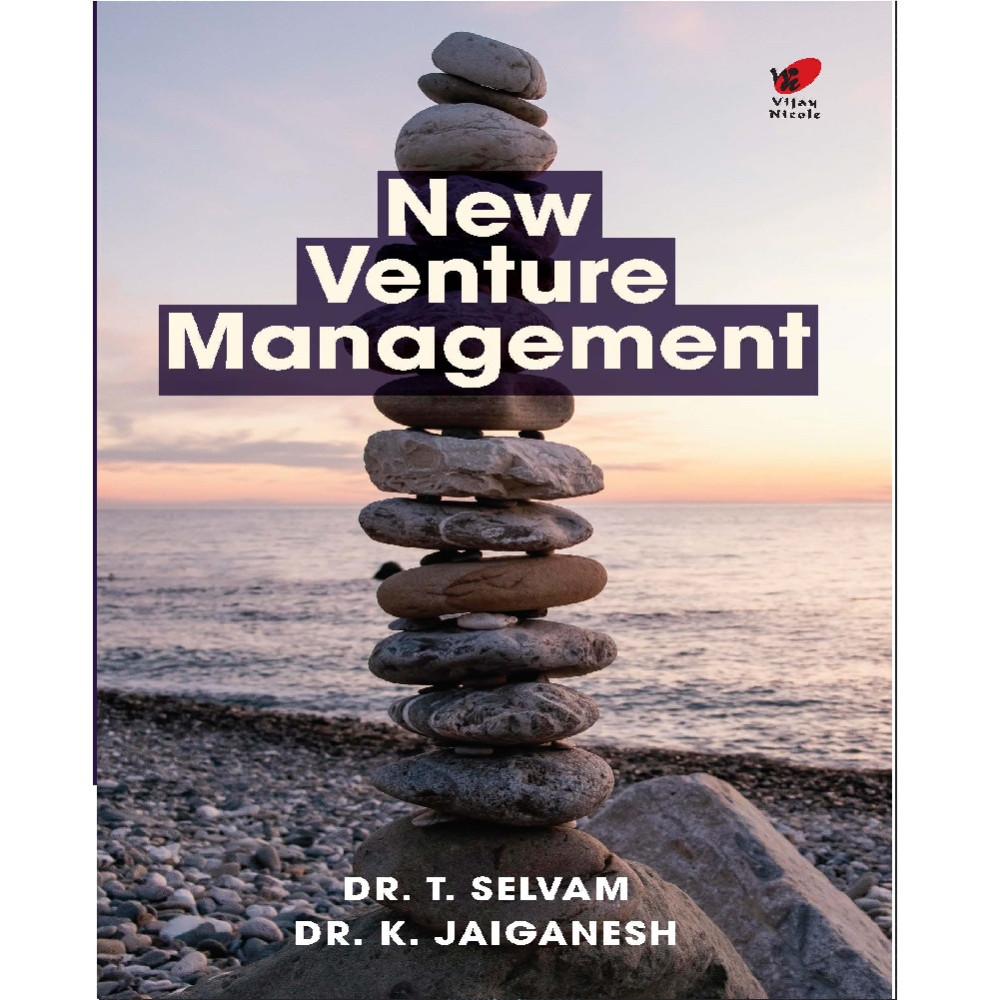
New Venture Management
- ₹195.00
SHARE
This book New Venture Management offers a clear and concise introduction to starting and managing a business, covering essential aspects like idea development, business planning, funding strategies, and growth management. Designed in line with academic needs, it is an ideal textbook for Commerce and Management students.
- Contents
- Preface
- Acknowledgement
- Chapter 1 Evolution and Importance
- 1.1 Evolution of New Venture Management
- 1.2 Importance of New Venture Management
- 1.3 Entrepreneurship: Importance, Creativity, and Innovation
- 1.3.1 Importance of Entrepreneurship
- 1.3.2 Developing Creativity in Entrepreneurship
- 1.3.3 Understanding Innovation in Entrepreneurship
- 1.3.4 Stimulating Creativity and Organizational Actions to Enhance Creativity
- 1.4 Organizational Actions that Enhance Creativity
- 1.5 Managerial Responsibilities in Enhancing Creativity and Innovation
- 1.6 Creative Teams: Structure, Development, and Management
- 1.6.1 The Power and Purpose of Creative Teams
- 1.6.2 Diversity as the Foundation of Creativity
- 1.6.3 Fostering Collaboration and Trust
- 1.6.4 Balancing Creative Freedom with Accountability
- 1.6.5 Constructive Conflict Resolution
- 1.6.6 Promoting Continuous Learning and Experimentation
- 1.6.7 Recognition and Motivation
- 1.6.8 Managerial Support and Leadership
- 1.6.9 Creating an Environment for Creativity to Flourish
- 1.6.10 The Future Belongs to Creative Teams
- 1.7 Sources of Innovation in Business
- 1.8 Managing Organizations for Innovation and Positive Creativity
- Review Questions
- Chapter 2 Opportunities for New Venture
- 2.1 Recognizing Opportunities and Generating Ideas
- 2.2 Entry Strategies: New Product, Franchising, Buying an Existing Firm
- 2.2.1 Evaluating Market Potential and Competitive Advantage
- 2.2.2 Points on Competitive Advantage
- 2.2.3 Leveraging Technology and Digital Transformation in New Ventures
- 2.2.4 Legal and Financial Considerations for New Ventures
- 2.2.5 Evaluating Market Potential and Competitive Advantage
- 2.2.6 Assessing Market Potential
- 2.3 Establishing a Competitive Advantage
- 2.4 Leveraging Technology and Digital Transformation in New Ventures
- 2.4.1 Key Technological Trends Shaping New Ventures
- 2.4.2 Legal and Financial Considerations for New Ventures
- 2.5 Financial Considerations
- 2.5.1 Start-up Capital and Funding Sources
- 2.5.2 Financial Planning and Budgeting
- 2.5.3 Break-Even Analysis
- 2.6 Risk Management and Contingency Planning
- Review Questions
- Chapter 3 Marketing in New Venture
- 3.1 Introduction
- 3.2 Importance of Marketing in New Ventures
- 3.2.1 Key Reasons Why Marketing is Important in a New Venture
- 3.3 Stages of Marketing in a New Venture
- 3.4 Technical Feasibility Analysis
- 3.4.1 Definition
- 3.4.2 Objectives of Technical Feasibility
- 3.4.3 Key Components
- 3.4.4 Importance of Technical Feasibility
- 3.5 Financial Feasibility Analysis
- 3.5.1 Definition
- 3.5.2 Objectives of Financial Feasibility
- 3.5.3 Key Components
- 3.5.4 Importance of Financial Feasibility
- 3.6 Industry and Competitor Analysis
- 3.6.1 Definition
- 3.6.2 Key Components of Industry Analysis
- 3.6.3 Key Components of Competitor Analysis
- 3.7 Assessing a New Venture’s Financial Strength and Viability
- 3.7.1 Key Aspects of Assess
- 3.8 Conclusion
- Review Questions
- Chapter 4 Ethical and Legal Foundation
- 4.1 Introduction: Ethical and Legal Foundation
- 4.2 Objectives of Ethical and Legal Foundation
- 4.3 Preparing the Proper Ethical and Legal Foundation
- 4.4 Characteristics of Ethical and Legal Foundation
- 4.5 The Importance of Ethics in Business
- 4.5.1 Legal Considerations for New Ventures
- 4.6 Consumer Protection Laws
- 4.7 Building a New-Venture Team
- 4.8 Building a Strong Start-ups Team
- 4.9 Leadership in New Ventures
- 4.9.1 Leadership Styles in Start-ups
- 4.10 Corporate Entrepreneurship
- 4.11 Social Entrepreneurship
- 4.12 Conclusion
- Review Questions
- Chapter 5 Financing Entrepreneurial Ventures
- 5.1 Sources of Financing for Entrepreneurial Ventures
- 5.1.1 Internal Financing (Bootstrapping)
- 5.1.2 Debt Financing (Loans and Credit)
- 5.1.3 Equity Financing (Investors and Venture Capital)
- 5.1.4 Crowd Funding
- 5.1.5 Government Grants and Subsidies
- 5.2 Financial Planning and Management for Start-ups
- 5.3 Financial Risk Management
- 5.4 Investor Relations and Funding Strategy
- 5.4.1 Investor Relations and External Investment Management
- 5.4.2 Managing Growth in a New Venture
- 5.5 Valuation of a New Company
- 5.5.1 Key Methods for Valuing a Start-ups or New Company
- 5.6 Arrangement of Funds for Growth
- 5.7 Traditional Sources of Financing for New Ventures
- 5.8 Alternate Sources of Funding for Start-ups, MSMEs, and New Ventures
- 5.8.1 Crowd funding
- 5.8.2 Revenue-Based Financing (RBF)
- 5.8.3 Peer-to-Peer (P2P) Lending
- 5.8.4 Microfinance Institutions (MFIs)
- 5.8.5 Impact Investing
- 5.9 Rules and Regulations Governing Institutional Support for Start-ups and MSMEs
- 5.10 Conclusion
- Review Questions
- Chapter 6 Entrepreneurship and New Venture Planning
- 6.1 Concept and Definitions of Entrepreneurship
- 6.1.1 What is Entrepreneurship?
- 6.1.2 Key Definitions of Entrepreneurship
- 6.1.3 Types of Entrepreneurship
- 6.2 Entrepreneurial Mindset
- 6.2.1 Key Characteristics of an Entrepreneurial Mindset
- 6.2.2 Traits and Qualities of Entrepreneurs
- 6.3 Entrepreneurship Process
- 6.3.1 Stages of the Entrepreneurship Process
- 6.4 Theories of Entrepreneurship
- 6.4.1 Economic Theories of Entrepreneurship
- 6.4.2 Psychological Theories of Entrepreneurship
- 6.4.3 Sociological Theories of Entrepreneurship
- 6.4.4 Opportunity-Based Theories
- 6.4.5 Factors Affecting the Emergence of Entrepreneurship
- 6.6 Role of Entrepreneurs in Economic Growth
- 6.7 Conclusion
- Review Questions
- Chapter 7 Business Plan
- 7.1 Business Plan in Entrepreneurship
- 7.2 Generating Business Ideas
- 7.3 Sources of Business Ideas
- 7.4 Evaluating Business Ideas
- 7.5 Team Building in Entrepreneurship
- 7.5.1 Key Roles in an Entrepreneurial Team
- 7.6 Technical/Product Development Team
- 7.6.1 Characteristics of a Strong Entrepreneurial Team
- 7.6.2 Team Building Strategies for Start-ups
- 7.7 Key Components of a Business Plan
- 7.7.1 Executive Summary
- 7.7.2 Business Description and Objectives
- 7.7.3 Market Analysis
- 7.7.4 Products and Services
- 7.7.5 Marketing and Sales Strategy
- 7.7.6 Operational Plan
- 7.7.7 Financial Plan and Projections
- 7.7.8 Funding Requirements and Investment Proposal
- 7.7.9 Risk Assessment and Contingency Plan
- 7.8 Importance of a Business Plan
- 7.8.1 Sources of Innovation, Creativity, and Entrepreneurship
- 7.8.2 Sources of Innovation in Entrepreneurship
- 7.8.3 Technological Advancements
- 7.8.4 Scientific Research and R&D
- 7.8.5 Government Policies and Regulations
- 7.8.6 Social and Economic Trends
- 7.8.7 Globalization and Market Expansion
- 7.8.8 Role of Creativity in Entrepreneurship
- 7.9 Challenges in Managing Innovation
- 7.9.1 Common Challenges in Managing Innovation
- 7.10 Entrepreneurial Strategy and Scaling Up
- 7.10.1 Key Strategies for Scaling Up a Business
- 7.11 Challenges in Scaling Up
- 7.12 Business Planning Process
- 7.12.1 Steps in the Business Planning Process
- 7.13 Importance of Business Planning
- 7.13.1 Drawing an Effective Business Plan
- 7.13.2 Steps in Drawing a Business Plan
- 7.14 Reasons for Business Plan Failures
- 7.14.1 Common Causes of Business Plan Failures
- Review Questions
- Chapter 8 Mobilizing Resources
- 8.1 Resource Mobilization in Entrepreneurship
- 8.1.1 What is Resource Mobilization?
- 8.2 Importance of Resource Mobilization
- 8.3 Types of Resources in Entrepreneurship
- 8.3.1 Financial Resources
- 8.3.2 Human Resources
- 8.3.3 Technological Resources
- 8.3.4 Physical Resources
- 8.3.5 Intellectual Resources
- 8.3.6 Social & Network Resources
- 8.3.7 Natural Resources
- 8.3.8 Time as a Resource
- 8.4 Process of Resource Mobilization
- 8.5 Arrangement of Funds for Business
- 8.5.1 What is Fund Arrangement?
- 8.5.2 Key Factors in Arranging Business Funds
- 8.6 Essential Components of a Funding Proposal
- 8.7 Traditional Sources of Financing
- 8.7.1 Key Sources of Traditional Financing
- 8.7.2 Venture Capital, Angel Investors, and Business Incubators
- Review Questions
- Chapter 9 Managerial Aspects of Business and Government Initiatives
- 9.1 Managing Finance in a New Enterprise
- 9.1.1 What is Financial Management?
- 9.1.2 Key Aspects of Financial Management
- 9.2 Understanding Capital Structure
- 9.2.1 What is Capital Structure?
- 9.2.2 Types of Capital in a Business
- 9.3 Choosing the Right Capital Structure
- 9.3.1 Debt Vs. Equity – A Strategic Decision
- 9.4 Organizational Structure and Human Resource Management
- 9.4.1 Types of Organizational Structures
- 9.5 Managing Human Resources in a New Enterprise
- 9.6 Marketing Mix
- 9.6.1 What is the Marketing Mix?
- 9.6.2 4Ps of the Marketing Mix (For Products)
- 9.7 Management of Cash Flow
- 9.7.1 What is Cash Flow Management?
- 9.7.2 Key Aspects of Cash Flow Management
- 9.8 Importance of Cash Flow Management
- 9.8.1 Ensures Business Survival and Growth
- 9.8.2 Helps Avoid Debt and Payment Delays
- 9.8.3 Supports Scaling and Expansion
- 9.9 Relationship Management
- 9.9.1 What is Relationship Management?
- 9.9.2 Types of Relationship Management
- 9.9.3 Importance of Relationship Management
-
Dr. T. Selvam, M.Com., M.B.A., M.Phil., Ph.D., M.Ed., and M.A (Sociology), is an Associate Professor in the School of Commerce at Takshashila University, Ongur, Tindivanam. With over 11 years of teaching experience at both UG and PG levels, he has served as an Assistant Professor at Srinivasan College of Arts and Science, Tagore college of Arts and Science, Modern College of Arts and Science and National College of Arts and Science. His research interests span multiple domains, and his scholarly contributions include publications in Scopus- indexed and open-access journals. He has also authored Six books.
Dr. K. Jaiganesh, M.Com., M.Phil., M.Ed., MBA., Ph.D., is an Assistant Professor of Commerce at Government Arts and Science College, Jayankondam. With 16 years of teaching experience, he has held as Assistant Professor at Government Arts College, Ariyalur, and the Directorate of Distance Education, Annamalai University. A dedicated researcher and educator, he has published more than 26 papers in national and international journals and actively engages in academic conferences, seminars, and faculty development programmes.
Reviews
There are no reviews for this product.

Labour Laws
₹495.00
The book Labour Laws provides an integrated and compact presentation of the subject. It covers all t..

Company Law & Secretarial Practice
₹225.00
The Companies Act 2013 is an important legislation which governs the structure, management and condu..

Essentials of Organisational Behaviour
₹250.00
Essentials of Organisational Behaviour has been thoroughly revised to align with the latest TANSCHE ..


Total Quality Management, 2e
₹350.00
Total Quality Management is an effective tool to manage and lead organizations towards the path of q..

Business Ethics & Values
₹295.00
Student-friendly and comprehensive, this book is designed to address the requirements of undergradua..

Essentials of Financial Services, 4e
₹250.00
This book Essentials of Financial Services, 4e provides a thorough foundation forthe study of the su..

Office Management & Secretarial Practice
₹225.00
Office Management & Secretarial Practice..
Business Environment
₹225.00
Business Environment is a comprehensive and student-friendly textbook that explores the key forces s..

Introduction to Retailing
₹180.00
This book provides a crisp introduction to the dynamic world of retailing. A significant highlight o..
Essentials of Company Law
₹250.00
This book Essentials of company Law is designed as a textbook for UG/PG Programmes of most Universit..

Economic and Other Legislations
₹225.00
Insurance has become a subject of compulsory study at the UG level across the country, because of it..

Basics of Event Management
₹195.00
This book Basics of Event Management introduces you to the basic and advanced topics in Event Manage..


