-
Your shopping cart is empty!

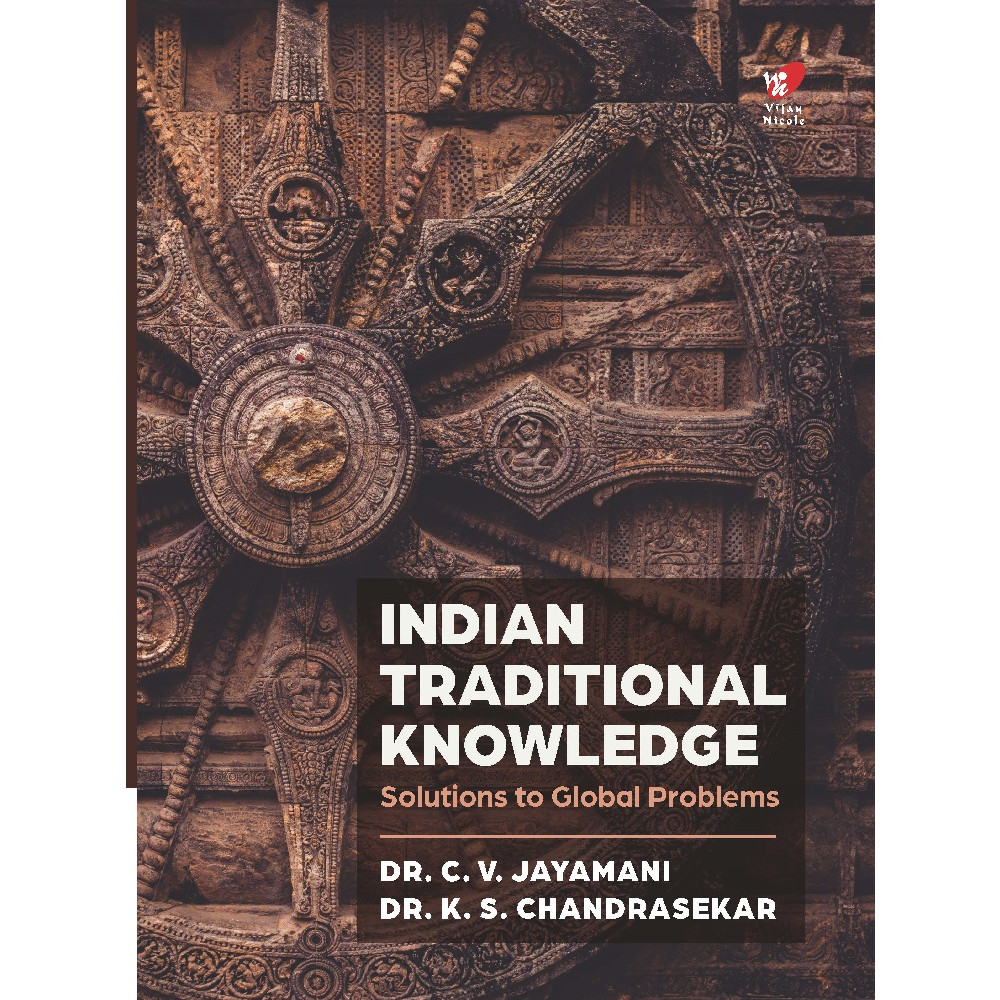
INDIAN TRADITIONAL KNOWLEDGE
- ₹495.00
SHARE
Indian Traditional Knowledge: Solutions to Global Problems explores the practical relevance of ancient Indian wisdom—particularly the Bhagavad Gita—in addressing contemporary economic, social, and environmental challenges. Drawing on selected slokas and their interpretations, the book examines how traditional concepts of duty, self-reliance, and collective welfare apply to today's developmental and governance issues. It presents this ancient knowledge not as philosophy confined to reflection, but as a practical framework for problem-solving in the modern world.
CONTENTS
Preface
Chapter 1
Relevance of Bhagavad Gita in Modern Times
The Philosophy of Karmayoga
Management by Example
The Causes and Causalities of Idleness
Bhagavad Gita for Development
A Pragmatic Philosophy
India’s Demographic Advantage
Skilling the Youth for Future
Making the Youth Motivated
The Skill in Crisis Management
The Work is Great
Marx to Maharshi
Acquisition of Knowledge
Greed of Global Man
Struggle in the Sunshine Sector
Life Ends @ Forty in IT Sector
Night Shift is a Nightmare
Simple Living and High Thinking
Emerging Trends in Indian Market Place
New Trends in Lifestyle Diseases Management
Traditional Knowledge in Business Schools
Conclusion
References
Key Words
Chapter 2
Vikasit Bharat: Artha Sastra to Artificial Intelligence
Focus on Agriculture
The Experience of COVID 19 Pandemic
Pathway to Speedy Recovery
Azadi ka Amritavarsh
Corruption-free Governance
Foreign Direct Investment (FDI)
Reformative Policies and Programmes
Direct Benefit Transfer (DBT)
The Doomsday Princes of Parallel Economy
Ayushman Bharat PM-JAY
Ease of Doing Business
Sojourns on the Spotlight
Honouring the Prime Minister
Summits and Strategic Relations
On Artificial Intelligence
Opportunities and Our Goals
Morals and Ethical Values
Conclusion
References
Key Words
Chapter 3
Bhagavad Gita for Vikasit Bharat
Challenging Modern Problems
Achieving Atmanirbhar Bharat
The Nectar of Immortality
Problem Solving Philosophy
Time for a Gita Decade
Gita: The Universal Message
The Relevance of Gita
Arjuna Vishada Yoga Vs Peter Principle
Work; as Natural as a Game
Well-being of the Society
Manifestation of Perfection
Gita and the Cyber-age Challenges
Bhagavad Gita: A Behavioral Approach
Krishna’s Behavioral Approach
Conflict Resolution
Mc Gregor’s Theory X&Y
The Man of Action: Concept of Theory Y
Works: The Pathway to Realization
Action is Superior to Inaction
References
Key Words
Chapter 4
Indian Traditional Knowledge – Bhagavad Gita Perspectives
The Vedas: The Ancient Knowledge
Saraswati: The Goddess of Knowledge
A Prayer to Goddess Saraswati: Saraswati Vandana Mantra
The Indian Treasure of Knowledge
Jnana is Spiritual Knowledge
The Strength of Knowledge Economy
Knowledge for Development
Strengthening the Human Capital
Bhagavad Gita: The Ancient Wisdom
Traditional Management Practices
Making the People’s Mindset Strong
Krishna Cure for Arjuna Syndrome
Happiness: The Buzzword in Business
Bhagavad Gita Management
The Timeless Traditional Knowledge
References
Key Words
Chapter 5
Mahatma Gandhi and Bhagavad Gita
Sense of Service and Sacrifice
Gita as his Mother
Pragmatic Philosophy
Swadeshi: Atmanirbhar Bharat
Cleanliness: The Gita Perspective
Gita, Gandhi and Modern Problems
Education and Employment
Prosperity through Cooperation
Strengthening the Society
Clean India Campaign
Krinvanto Viswamaryam
Progress of Human Race
Polluting Panchabhuta
Hopes and Expectations
Gandhiji: The Source of Inspiration
Welfare and Wellbeing of the People
Support for Resource Conservation
Reaching the People through DBT
Land of Opportunities
Conclusion
Reference
Key Words
Chapter 6
Gita’s Integrated Approach to Health and Happiness
Health, Efficiency and Excellence
Managing Health Bhagavad Gita Perspective
Traditional Knowledge in Health Management
Ancient Wisdom on Health Promotion
Environmental Ethics through Panchabhhotopasana
Prithyupasana - The Maha Upasana of Mankind
Eco-sensitive Efforts for a Healthy Living
Hundred Year of Healthy Life
Are You Killing Yourself Mr. Modern?
Principle and Practice of Natural Living
Preventive Food Medicine
Better Life Style for Modern Man
Healthy Lifestyle for Modern Youth
The High Pitched Fast Life
Kitchen is the Health Centre
A Call to Modern Youth
References
Key Words
Chapter 7
Gita and Environmental Management
Enhancing Energy Efficiency
Forests in Ancient India
Green Tech and Business Policies
Small Steps and Rich Rewards
Environmentally Responsible Products
Home Remedy from Kitchen
L-I-F-E: Life Style for Environment
Government Interventions
Eco-friendly Lifestyle
Natural Living the Ancient Wisdom
Environmental Ethics and Panchabhhothopasana
Prithyupasana - The Maha Upasana of Mankind
Reinventing Nature Friendly Tradition
New Paradigm for Development
Green Economics its Impact on Environment
Economy Environment Inter linkage
Environmental Impact
Green Economics for Growth
Corporate World and Environmental Concerns
Exchange of Money and Environmental Behaviour
References
Key Words
Chapter 8
Amrit Bharat Atmanirbhar Bharat
Every Challenge is an Opportunity
Youth Power and Vikasit Bharat
India First in Black Money Hunt
Use of Black Money in Elections
Number of Tax Payers Increased
GST: The Game Changer
Milestone in the Tax Reforms
Improvement in Financial Inclusion
Business in the Bottom-line
Transforming India through Digitalization
Supporting Digitalization
India’s Voyage towards Five Trillion Economy
Third Largest Economy Expectation
Converting the Community Skills in to Corporate Competence
Harnessing the Power of Village People
Social Entrepreneurship for Vikasit Bharat
New Paradigm for Sustainable Development
Social Entrepreneurship: A Venture with a Difference
Promoting Entrepreneurs in India
A Helping Hand to Rural Entrepreneurship
Conclusion
References
Key Words
Chapter 9
The Policy of Transformation: Ancient to Modern
India Becomes a Global Power
Quest for Happiness
Education for Enlightenment
Ancient Learning and Modern Teaching
Transforming India through Education
Reforms, Resilience and Resurgence
Reform, Perform and Transform
Quantum Leap to 5 Trillion USD Economy
Scaling up Investment Prospects
Digital Transformation of India
A Model in Digital Transformation
Celebrating the Anniversary of Aditya L1 Mission
A Big Boost to Industry and Society
Global Leadership in Science
India the Vikasit Bharat
A Decade of Development
References
Key Words
Chapter 10
Transforming India into $5 Trillion Economy
Agriculture and Agripreneurs
Impact of Atmanirbhar Bharat
Transforming India into $ Five Trillion Economy
MSME: An Emerging Area
MSME: Backbone of the Economy
Status of Startups in India
Boosting the Banking Sector
Mounting Non-Performing Assets
Wonders in the Banking Sector
Digitalizing the Vikasit Bharat
Role of Open Digital Ecosystem
Towards Meeting Net Zero Carbon Emission
Making the Tax System More Efficient
Widening the Tax Base
Improving Ease of Doing Business
Modi’s Good Governance
Changing Investment Landscape
Conclusion
References
Key Words
Dr. C. V. Jayamani is the former Professor at the School of Management Studies, CUSAT, Kochi, with over 40 years of teaching, research, and consulting experience. He holds an M.Com. and Ph.D. in Commerce from Calicut University and has guided 7 scholars to their Ph.D. He serves as Vice Chairman of the Institute of Management Development and Research and Chief Editor of the journal Management Researcher and has held positions including Independent Director of HIL (India) Limited and member of the Board of Governors, IIM Kozhikode. A well-known speaker on the Vedas and Gita, he has authored nine books.
Dr. K. S. Chandrasekar is Vice Chancellor of Cluster University of Jammu, with over 30 years of teaching, research, and consulting experience. He holds a B. Pharm (Hons) from BITS Pilani, an MBA from Bharathiar University, and a Ph.D. in Management from Alagappa University. He was formerly Registrar, Acting Vice Chancellor, Campus Director and Dean, Faculty of Management Studies of University of Kerala. He has guided 68 scholars to their Ph.D. and authored twelve management books and 215 scholarly articles. He was instrumental in starting the Department of Vedic Studies at Cluster University of Jammu.
Reviews
There are no reviews for this product.

Brand Management
₹495.00
This book Brand Management is designed for students specialising in marketing and as a reference for..

Basics of Event Management
₹195.00
This book Basics of Event Management introduces you to the basic and advanced topics in Event Manage..

Principles of Management, 2e (AU - R2017)
₹395.00
Principles of Management, 2e (AU - R2017)..

Fundamentals of Production & Operations Management
₹550.00
This comprehensive book on Fundamentals of Production and Operations Management has been designed to..

Cases in Marketing
₹325.00
A book of case studies on market research, pre-purchase needs, segmentation strategies, sales promot..

Financial Markets and Institutions, 5e
₹995.00
The Fifth Edition of the book on Financial Markets and Institutions is an updated and thoroughly rev..

Human Resource Development
₹450.00
This book has been written in a lucid style covering the various aspects, concepts and practices of ..

Merchant Banking and Financial Services 4e
₹495.00
Contemporary developments in the realm of domestic and global financial systems have brought about a..
-250x250.png "A Student Handbook on Company Law and Practice, 3e")
A Student Handbook on Company Law and Practice, 3e
₹695.00
This book is designed as a textbook for professional courses and other allied business courses. It i..

Industrial Relations, Labour Welfare and Labour Laws
₹695.00
The book covers topics on social security, wage and salary administration, worker participation in m..

Research Methodology in Business Management
₹495.00
This book is written to cater to the academic needs of the MBA students. The book will also be usefu..

Financial Management 4e
₹995.00
The comprehensive first course textbook provides in depth coverage of the principles and practise of..

Product Management 3e
₹595.00
This book is designed as a core textbook for students specialising in marketing and as a reference f..
Financial Services & Systems 2e
₹575.00
Financial Services and System imparts knowledge in the various areas of financial services and syste..


